Web Design Project Scope: What Is Included, Optional, and Often Forgotten
Understand what web design scope can include, what is optional, and which forgotten items create delays or surprise costs.

Website quotes vary because scope varies
A web design project can include discovery, strategy, copy, SEO, design, development, CMS setup, integrations, training, maintenance, or almost none of those. That is why comparing quotes by price alone gets messy.
Before choosing a web design company, make sure you are comparing the same kind of project.
Core scope usually includes the build path
Most serious website projects include discovery, sitemap planning, design, development, mobile responsive layouts, CMS setup, QA, and launch support.
The depth of each item matters. A sitemap for a 6-page starter site is not the same as a sitemap for a service business with locations, industries, resources, and SEO priorities.

Optional scope can be essential depending on the goal
Copywriting, SEO strategy, photography, ecommerce, integrations, analytics, and custom CMS workflows may be optional in a proposal, but they are not optional for every business.
If the site needs to generate leads, support local SEO, or help staff publish content, those items may belong in phase 1.
Content scope is usually the biggest hidden variable
Many website delays are really content delays. Someone has to decide what pages exist, what each page says, who approves it, what photos or proof are needed, and what old content should be kept.
If copywriting is not included, ask who owns it and when it is due. If copywriting is included, ask how interviews, drafts, revisions, and approvals work. Content is not a side errand. It is the material the website is built from.
- / Who writes new page copy?
- / Who reviews technical or service details?
- / Who supplies photos, testimonials, and case studies?
- / Who decides what old content is migrated?
- / Who approves final copy before development?
Forgotten items create the surprise costs
Redirects, content migration, form routing, privacy pages, accessibility checks, tracking, training, and post-launch maintenance often get missed because they are less visible than design.
They become very visible when a form breaks, a page loses traffic, or nobody knows how to update the site.
Integrations need owners before development starts
Forms, CRMs, email platforms, booking tools, payment systems, job boards, donation tools, live chat, analytics, and call tracking can all affect scope.
The question is not only whether the integration is possible. It is who owns the account, what data needs to move, how success is tested, and what happens if the tool changes after launch.
Phasing is better than vague trimming
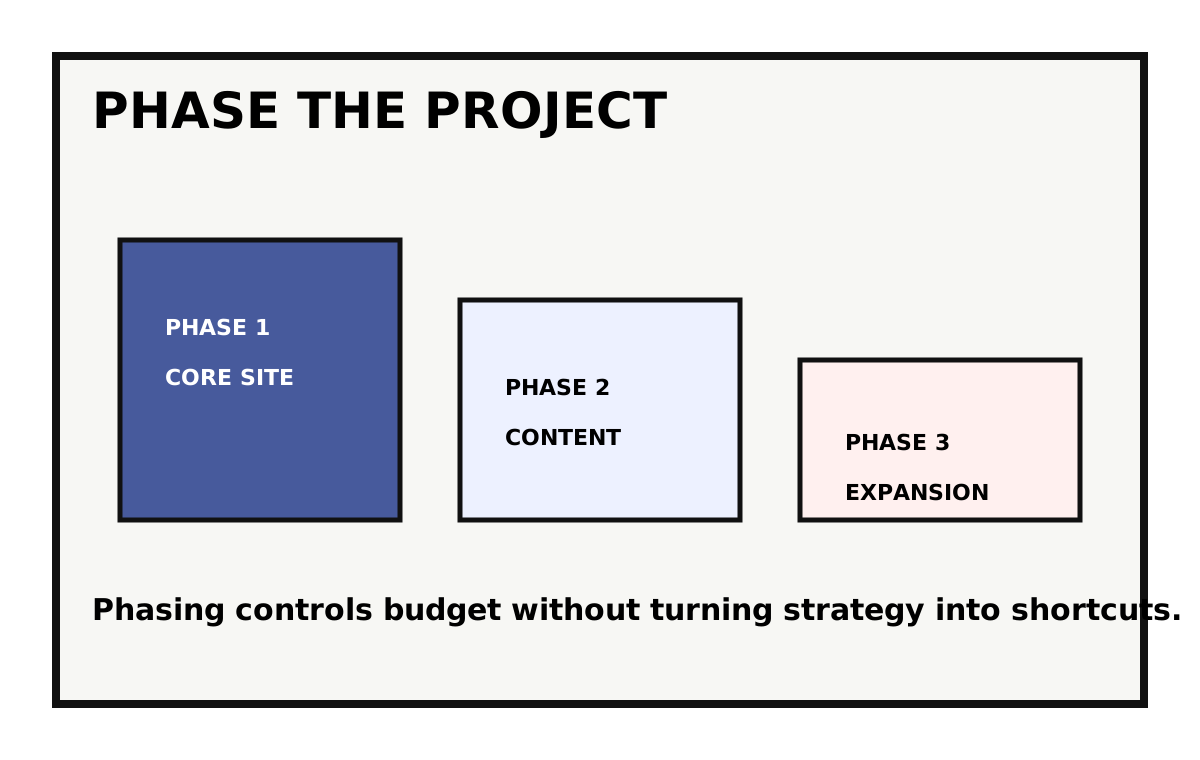
If the budget cannot support everything at once, phase the project. Launch the strongest core site first, then add deeper content, advanced integrations, landing pages, or case studies later.
A phased plan should still protect the foundation. Cheap shortcuts and smart phasing are not the same thing.
// NEXT STEP
Need help making sense of website scope?
Lovell Media Group can turn a fuzzy website wish list into a real scope: what has to be designed, written, built, migrated, connected, tracked, trained, and supported now, and what can wait for phase 2.
Scope your project ->