A Website Redesign Checklist for Businesses in Maryland and the DC Metro Area
Use this Maryland website redesign checklist to plan goals, stakeholders, content, SEO, CMS, QA, launch, and post-launch support before rebuilding.

A redesign should be planned before anyone designs a homepage
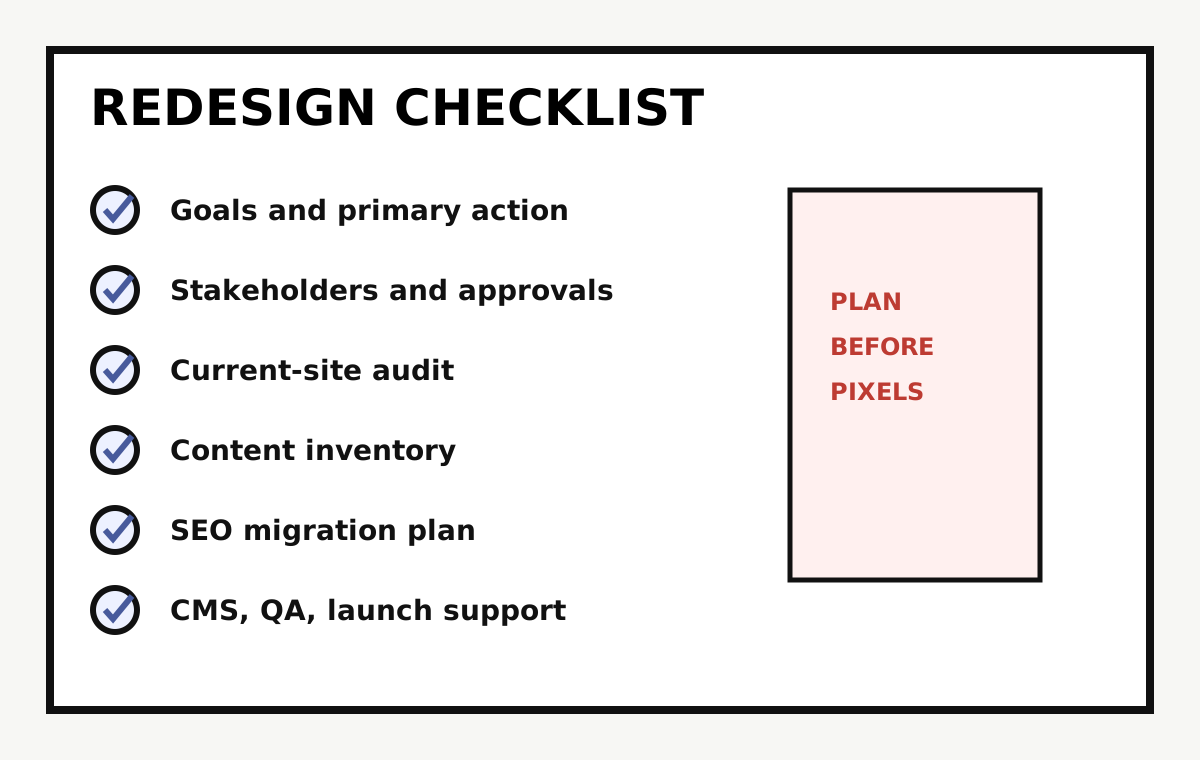
The best website redesigns start with goals, content, SEO, stakeholders, CMS needs, and launch risk. If those pieces are unclear, the project becomes a design exercise with business consequences.
For Maryland and DC Metro organizations, that usually means multiple decision makers, competitive local search, and customers who compare options quickly. A checklist keeps the project grounded.
1. Define what the redesign must accomplish
A redesign goal should be more specific than "make it look better." Better design is valuable, but only when it helps the business outcome.
Name the main job: more qualified leads, clearer services, better recruiting, stronger donations, easier updates, improved local SEO, better mobile performance, or a more credible brand presence.
- / What action should visitors take?
- / Which audience matters most?
- / Which pages support revenue or mission outcomes?
- / What does the current site fail to explain?
- / What would make the project worth the investment?
2. Identify stakeholders early
Website redesigns slow down when the right people enter too late. Sales, operations, leadership, marketing, customer service, IT, and program teams may all see different problems.
You do not need every stakeholder in every meeting. You do need their input before the sitemap, copy, and approval path are locked.
3. Audit the current site before replacing it
Your current site contains useful evidence, even if everyone is tired of it. Analytics can show which pages attract traffic, which sources bring leads, and where users drop off.
Search Console can show which queries and pages already have visibility. That information should guide the redesign instead of getting thrown away.
- / Top landing pages.
- / Top converting pages.
- / High-impression search queries.
- / Broken or outdated pages.
- / Slow pages.
- / Mobile usability issues.
4. Sort content into keep, improve, merge, and remove
Content migration is where many redesigns get messy. Some pages should be preserved. Some should be rewritten. Some should be merged. Some should disappear with a redirect.
Do this before design. Page structure, navigation, templates, and SEO all depend on knowing what content the new site needs.
5. Protect SEO during the redesign
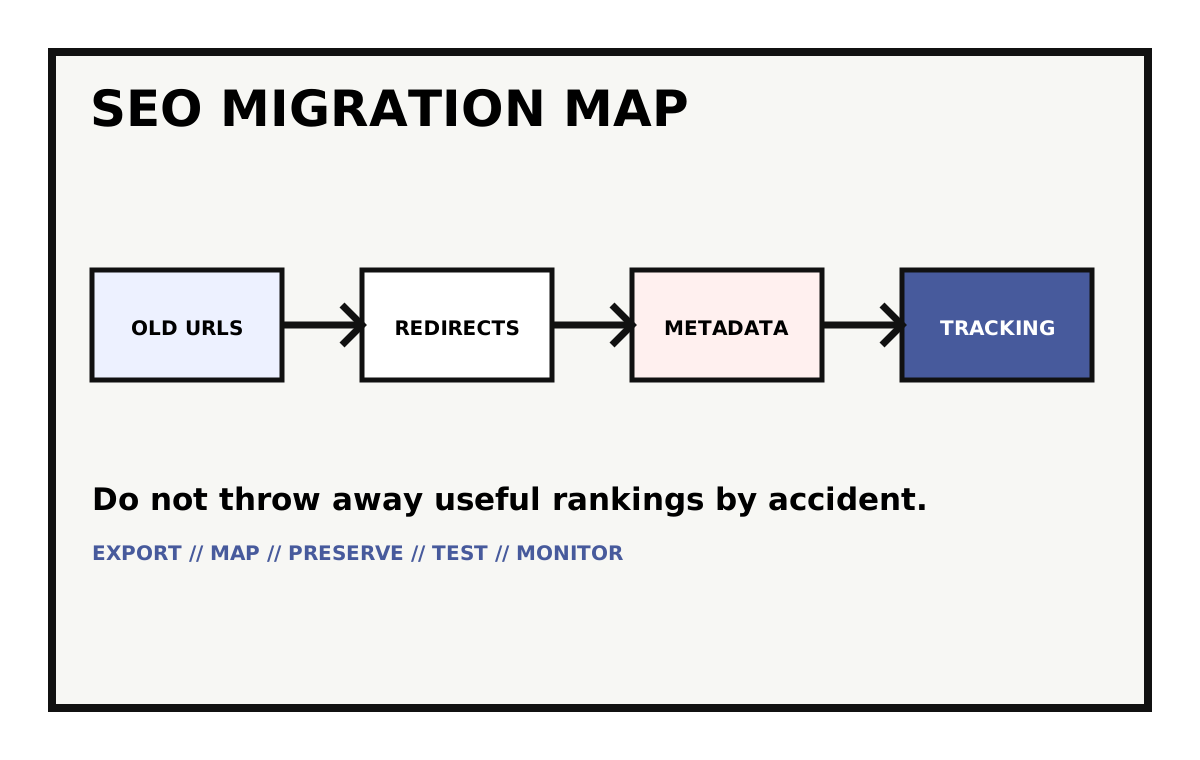
A redesign can hurt search visibility if URLs change without redirects, important copy gets removed, metadata is ignored, internal links disappear, or the new site launches with indexing issues. That is why local SEO and web design should share one launch plan.
SEO preservation is not complicated in theory. It is just easy to skip when no one owns it. Assign it clearly.
- / Export current URLs.
- / Map old URLs to new URLs.
- / Preserve or improve high-value content.
- / Write titles and meta descriptions.
- / Update internal links.
- / Submit the new sitemap.
- / Check indexing after launch.
6. Plan the CMS around real staff workflows
The site should be easy to update after launch. That means knowing who edits services, team members, blog posts, events, locations, forms, and calls to action. The same thinking carries into the website handoff checklist.
A redesign that looks great but traps every small edit behind a developer ticket will lose momentum quickly.
7. QA the boring things
The launch checklist should include forms, phone links, mobile layouts, redirects, analytics, thank-you pages, browser testing, image compression, accessibility basics, and backup plans.
These details are not glamorous. They are what keep a new site from leaking leads on day 1.
8. Decide what success will be measured against
A redesign should have a before-and-after baseline. Capture current traffic, rankings, conversions, phone clicks, form submissions, page speed, and lead quality before the old site disappears.
That baseline keeps the project honest. If the goal is more qualified leads, you need more than launch excitement. You need the tracking in place to see whether the new site is actually moving the business in the right direction.
- / Current organic traffic and top landing pages.
- / Current form submissions, phone clicks, and booking starts.
- / Current ranking pages and high-impression queries.
- / Current page speed and mobile usability issues.
- / Current lead quality notes from sales or intake teams.
9. Plan approvals before they become delays
Redesigns lose weeks when every page needs a new round of surprise feedback. Decide who approves sitemap, copy, design, development, legal language, photography, and launch before the work begins.
For Maryland and DC Metro teams with owners, directors, boards, or department leads involved, this matters as much as the design file. The approval path is part of the scope.
Use the checklist to control scope
A redesign checklist does not make the project bigger by default. It makes the project clearer.
When goals, content, SEO, CMS, and launch needs are visible, you can decide what belongs in phase 1 and what can wait.
// NEXT STEP
Planning a redesign in Maryland or the DC Metro area?
Lovell Media Group can turn the redesign from a pile of opinions into a working plan: current-site audit, sitemap, content priorities, SEO migration, conversion paths, CMS decisions, launch QA, and a handoff your team can actually use.
Start with an audit ->// RELATED READING