
SEO should be planned before the site launches
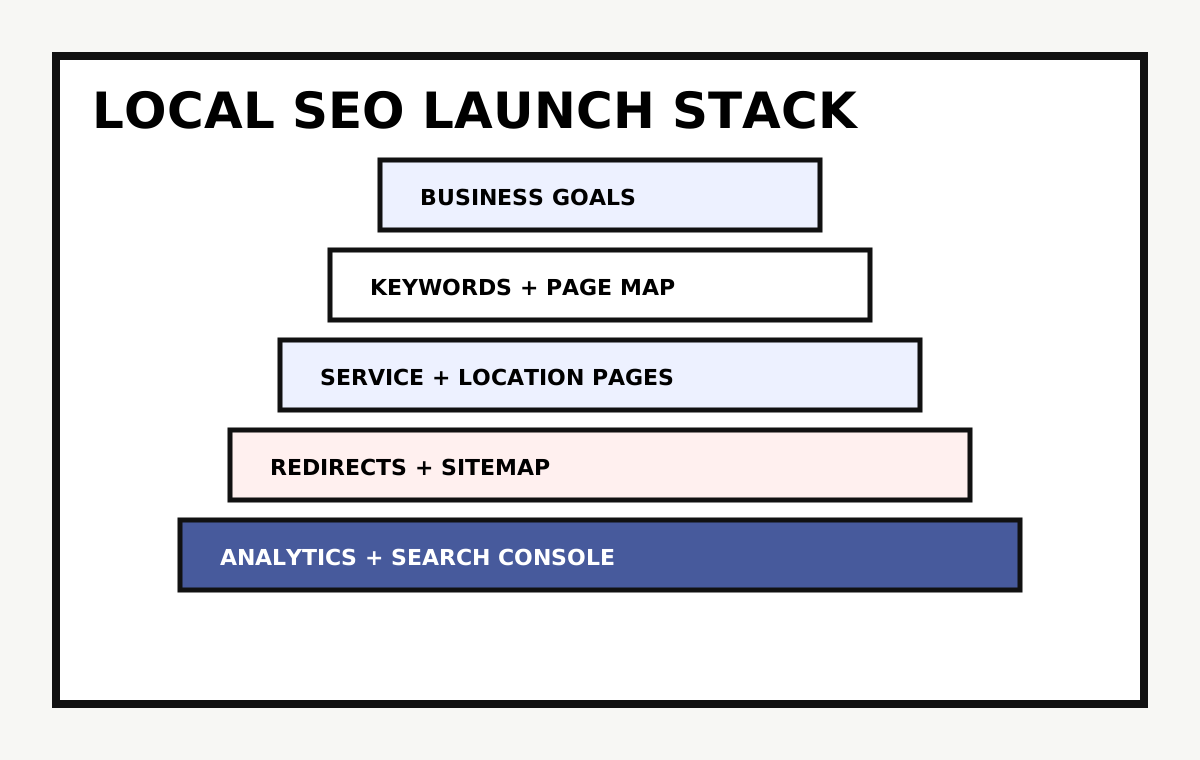
A new website should not launch first and get SEO later. For Frederick businesses, local SEO starts with the sitemap, service pages, location relevance, technical setup, and tracking.
This is especially important during a website redesign, where changing URLs or removing useful content can cost visibility.
Map services and locations to real pages
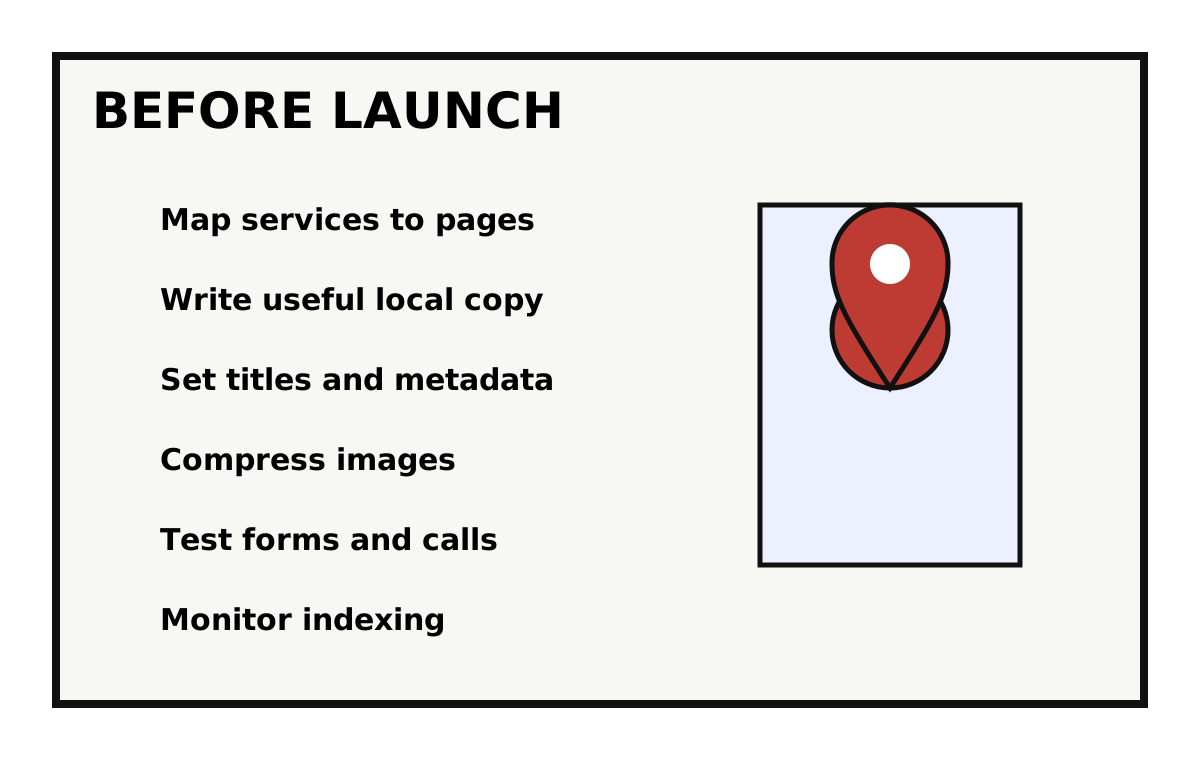
Start by listing your services, the areas you serve, and the searches that matter. Then decide which topics deserve their own pages.
A good map avoids thin doorway pages. It creates useful pages for real visitors while giving Google a clear structure to understand.
Build technical basics into the site
Technical SEO is not only for large sites. A local business website still needs crawlable pages, clean URLs, fast load times, mobile-friendly layouts, optimized images, schema opportunities, and a sitemap.
Many of these choices happen during web design and development, not after.
- / Use descriptive URL slugs.
- / Write unique title tags and meta descriptions.
- / Compress images before launch.
- / Test mobile layouts and forms.
- / Submit the sitemap after launch.
Protect what already ranks
If the current site has traffic, export existing URLs and map redirects before launch. Do not assume old pages can disappear without consequence.
This is one of the easiest redesign mistakes to avoid. It just needs an owner.
Write titles and descriptions for humans first
Title tags and meta descriptions help Google understand the page, but they also shape what people see in search results. A vague title wastes the moment when someone is deciding whether to click.
Use the service, location, and reason to care. A page title like "Emergency Plumbing in Frederick, MD" is more useful than "Services." A description that mentions same-day help, licensed technicians, or clear next steps gives the searcher a reason to choose you.
- / Give every important page a unique title.
- / Match the title to the page's actual intent.
- / Write descriptions that support clicks, not keyword stuffing.
- / Check that important pages are indexable before launch.
Plan measurement before the first visitor arrives
Local SEO is easier to improve when the new site launches with tracking already in place. Set up analytics, Search Console, call tracking or phone-click events, form tracking, and conversion goals before launch.
That way the first 30 to 90 days produce useful evidence. You can see which pages are being found, which actions people take, and where the site needs more content or stronger conversion support.
Connect the website to local proof
Local SEO is stronger when the site reflects the real business: service areas, reviews, photos, team details, certifications, local projects, and a consistent Google Business Profile.
The website and local SEO strategy should reinforce each other.
// NEXT STEP
Launching or redesigning a local business website?
Lovell Media Group can build the SEO foundation before the site goes live: service structure, metadata, redirects, local proof, tracking, and a launch checklist that protects visibility instead of hoping it survives.
Explore local SEO ->// RELATED READING
Website Redesign / 14 min read
A Website Redesign Checklist for Businesses in Maryland and the DC Metro Area
Web Design / 12 min read
Website Redesign vs Website Refresh: Which Does Your Frederick Business Need?
Web Design / 13 min read