Web Design for Local Service Businesses: Turning Visitors Into Calls and Quotes
Learn what local service business websites need to turn visitors into calls, quote requests, booked appointments, and qualified leads.
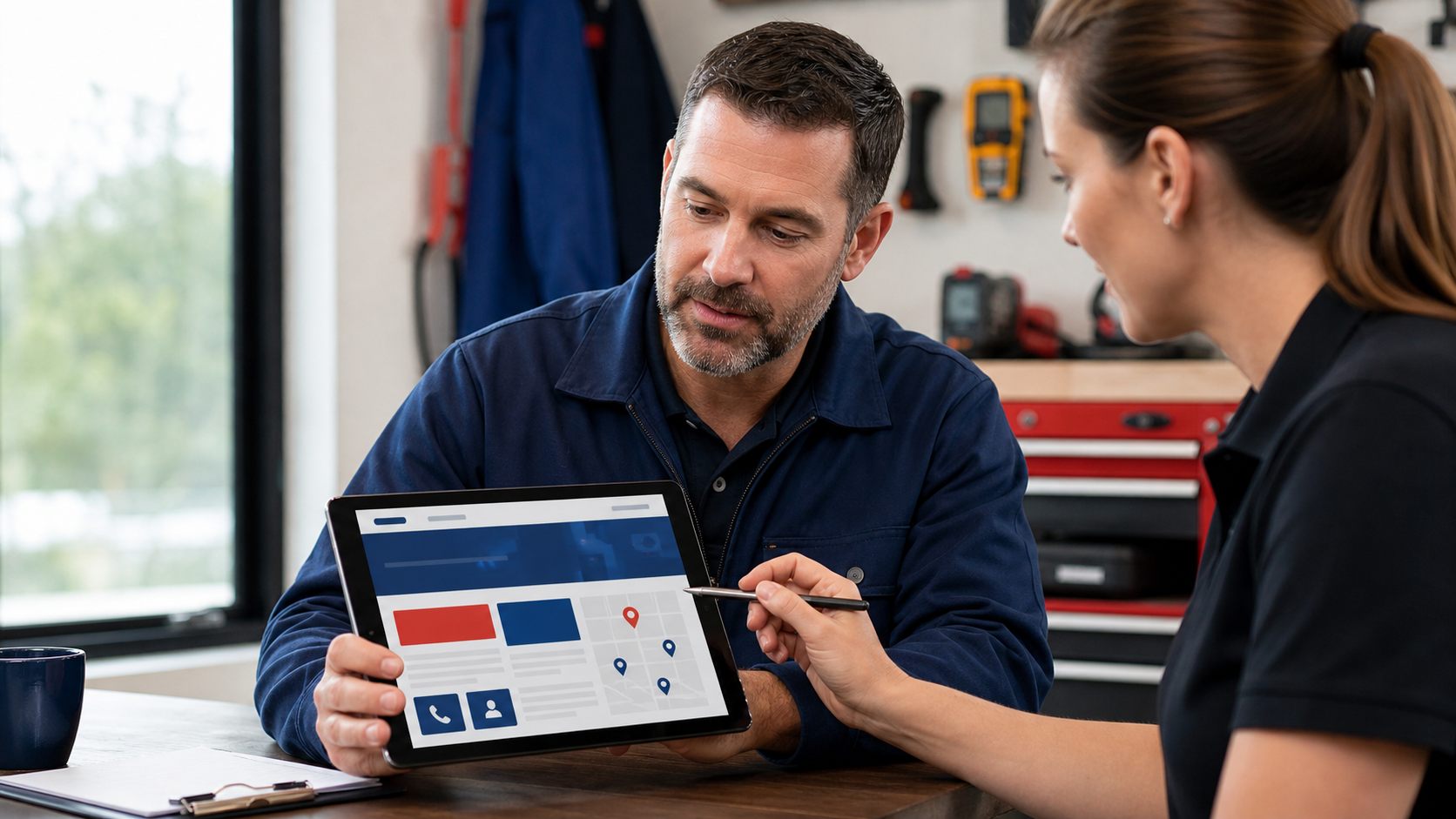
A local service website should make it easy to trust you and take the next step
For local service businesses, web design is not just presentation. It is the path from search to call, quote request, appointment, or consultation.
That path has to work fast. A homeowner, facility manager, patient, or business owner comparing options wants to know what you do, where you work, whether you are credible, and how to reach you.
The first screen has 5 jobs
The top of the homepage should answer the questions a visitor brings with them. If they have to scroll or decode clever copy to know whether you serve their area, the page is already creating friction.
This is especially true in competitive Frederick and Maryland service markets. People are not browsing for fun. They are trying to solve a problem.
- / Say what service you provide.
- / Say who you help.
- / Signal where you work.
- / Show why you are credible.
- / Make the next step obvious.

Service pages should answer buying questions
A strong service page does more than list the service. It explains the problem, the process, common options, what affects cost, signs the visitor needs help, and what happens after they reach out.
This helps SEO because the page is more useful. It helps sales because the lead arrives with better expectations.
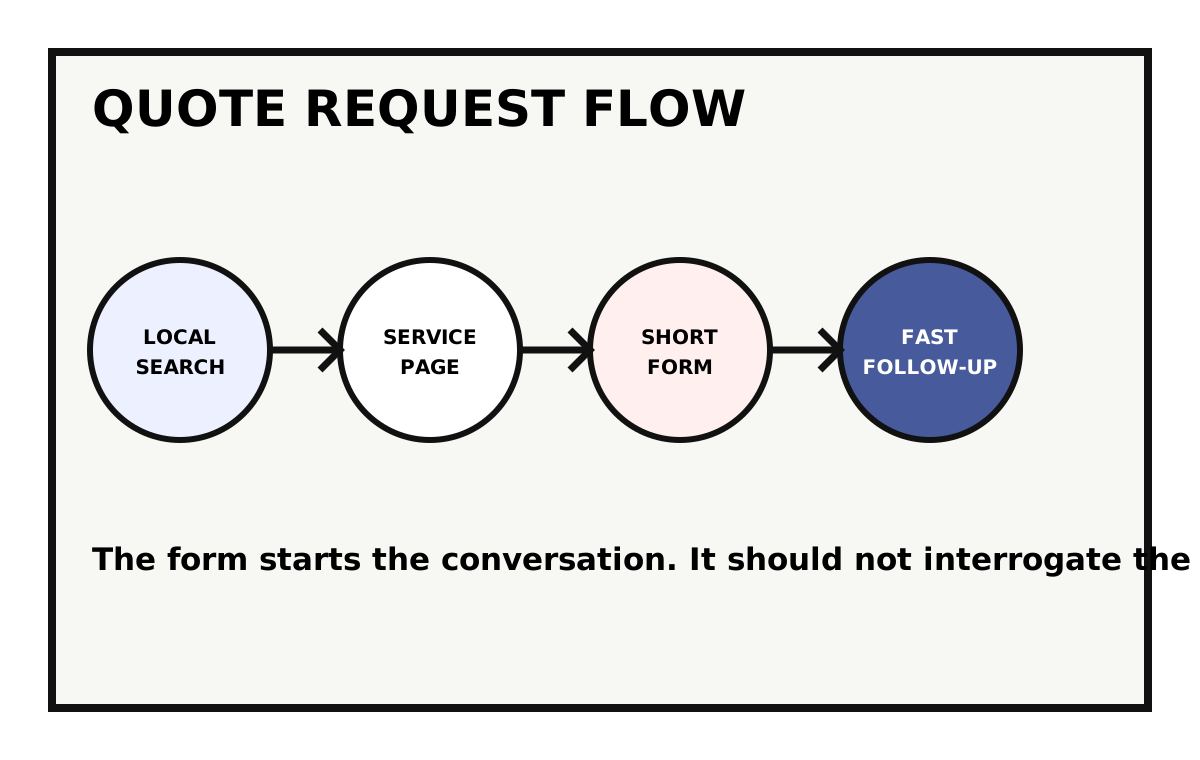
Calls and quote requests need different paths
Some visitors want to call now. Others want to send details and hear back later. A good service website supports both without making either path compete for attention.
Tap-to-call matters on mobile. Short quote forms matter for people who are not ready to talk yet. The site should also set follow-up expectations so the visitor knows what happens next.
Trust belongs near action
Reviews, project photos, certifications, guarantees, team information, and case studies should appear close to the conversion point. If someone is deciding whether to request a quote, that is when proof does the most work.
A separate reviews page is useful, but it should not be the only place trust appears.
- / Show reviews on service pages.
- / Use project photos where relevant.
- / Mention certifications near claims.
- / Add FAQs before the CTA.
- / Make contact details easy to verify.
Local SEO and conversion need the same structure
Local SEO pages should not be thin doorway pages. They should help real people understand service fit in a real market.
That means building pages around useful service and location combinations, adding relevant proof, and linking related pages in a way that helps both visitors and Google.
Price questions need an honest path, even without a public price list
Many service businesses avoid talking about price because every job is different. That is fair. But visitors still need help understanding what affects cost before they call.
You can explain pricing factors without publishing a rigid rate sheet: project size, urgency, materials, service area, site conditions, customization, ongoing support, or inspection needs. This reduces bad-fit inquiries and helps serious buyers feel prepared.
- / Explain what changes the estimate.
- / Name what information you need to quote accurately.
- / Tell visitors whether you offer free estimates, consultations, or site visits.
- / Clarify whether urgent work follows a different process.
Industry pages should reflect real buyer concerns
A plumber, remodeler, attorney, accountant, clinic, and B2B consultant do not need the same website. Each buyer brings different fears, timelines, proof needs, and decision steps.
That is where generic service-business web design falls short. A strong site adapts the content model to the buyer: emergency calls for urgent trades, galleries for visual work, credentials for regulated services, intake clarity for professional firms, and privacy cues for sensitive categories.
Measure the actions that matter
A service business should track calls, form submissions, quote requests, booking clicks, and lead source. Pageviews alone do not tell you whether the site is working.
Once those actions are tracked, decisions get easier. You can improve the pages that attract visitors but fail to convert, and you can invest more in the channels that produce real inquiries.
Design should reduce hesitation
The best service business websites feel clear, credible, and easy to act on. They do not bury the service. They do not hide the phone number. They do not make visitors read 5 pages before reaching out.
Every design choice should help the right visitor move one step closer to a real conversation.
// NEXT STEP
Need a local service website that produces better inquiries?
Lovell Media Group builds service-business websites around the moments buyers hesitate: service fit, location, price factors, proof, response time, and the next step. The result is a site that supports calls, quotes, and cleaner follow-up instead of just looking finished.
Explore web design services ->// RELATED READING